How Does Staying Power Help Pastors Build Resilience for Long-Term Ministry?
A pastor can preach a strong sermon on Sunday and still feel drained by Monday morning. Ministry asks leaders to carry other people’s grief, conflict, and spiritual needs while managing their own.
So, how do pastors build resilience without becoming harder, busier, or emotionally distant?
Instead, healthy resilience grows when pastors remain rooted in Christ, connected to trusted people, and honest about what ministry is doing inside them.
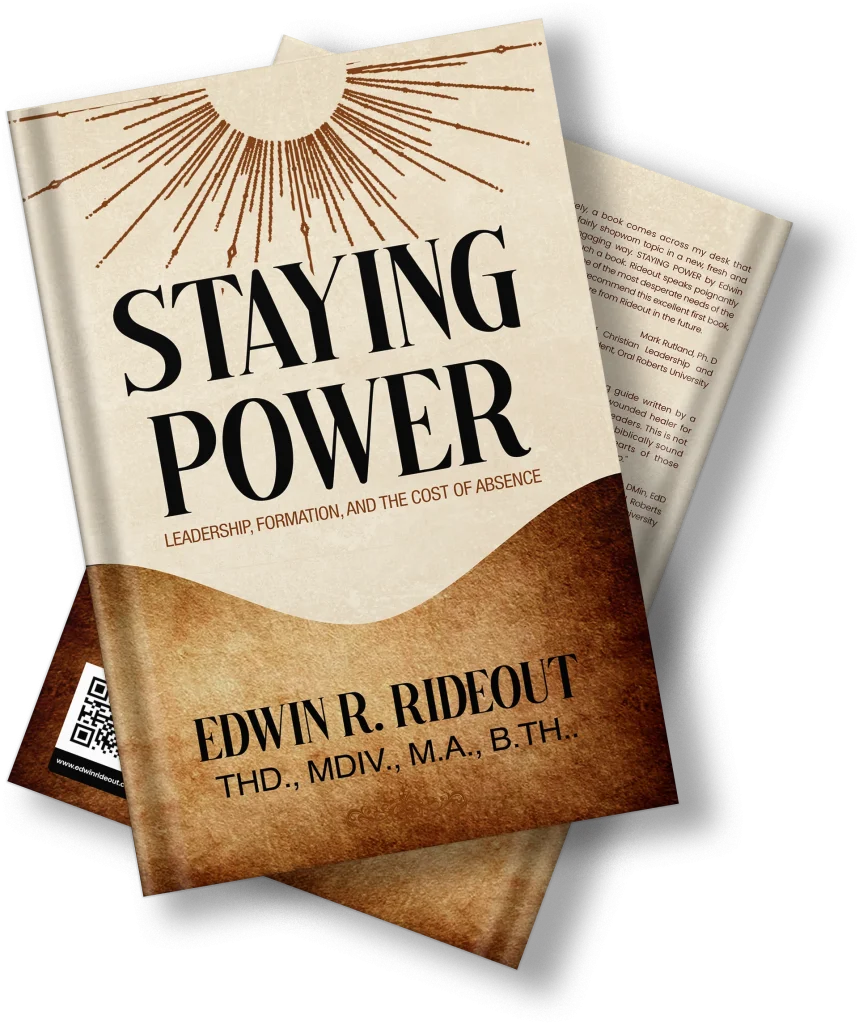
That is a central concern in Edwin R. Rideout’s STAYING POWER: Leadership, Formation, and the Cost of Absence. After three decades of pastoral ministry, Edwin R. Rideout argues that leaders need more than gifting and competence. They need formation that sustains the soul.
Why Pastor Burnout Is Not Always About Working Too Much
Pastor burnout is often described as an overloaded calendar problem. Sometimes it is. Yet exhaustion can also come from carrying responsibility without enough relational support.
Barna’s 2026 research adds context. Emotional strain among American Protestant pastors has improved, but vocational satisfaction remains lower than a decade ago. Only 52 percent described themselves as very satisfied with their vocation in 2026, compared with 72 percent in 2015.
That gap suggests more than fatigue. A pastor may feel called while questioning whether daily ministry is sustainable.
Similarly, Edwin R. Rideout’s qualitative surveys point in that direction. Leaders repeatedly connected stability and resilience with mentoring. When relational guidance was missing or unhealthy, leaders described distrust, guardedness, and wounds.
Build Resilience Through Formation, Not Performance
Christian leadership can reward visible strength. Sermons get delivered. Problems get solved. Because the work continues, people may assume the leader is healthy.
But productivity is not proof of formation.
For example, a pastor can function while losing curiosity, tenderness, patience, or openness to correction. Resilience should not mean becoming impossible to hurt. It means learning to process pressure without letting it reshape your character.
Edwin R. Rideout describes formation as slow, intentional, relational work. Prayer, Scripture, Sabbath, confession, accountability, and mentorship appear as recurring practices. Together, they create rhythms that keep the inner life from being neglected.
Pastoral Leadership Needs People Who Ask Better Questions
One danger of pastoral leadership is that many relationships revolve around what the pastor provides.
People ask, “What are we doing next?” or “Can you help?” Far fewer ask, “How are you really doing?”
Therefore, resilient leaders need relationships where they do not have to perform leadership.
In practice, a mentor, peer, spouse, or friend can notice changes the pastor may miss. Irritability, isolation, defensiveness, numbness, and urgency can become early warning signs of ministry burnout.
Moreover, Barna reported in 2025 that half of pastors received no professional support, while pastors scored lowest in areas tied to relationships and well-being. Support is not an accessory to ministry. It helps make ministry sustainable.
Small Rhythms Can Protect Long-Term Ministry
Staying power is built in ordinary choices before crisis arrives.
Pastors can begin by protecting simple rhythms:
- Keep a genuine Sabbath that is not used to catch up on church work.
- Maintain one relationship where honesty matters more than reputation.
- Notice recurring resentment, fatigue, or emotional withdrawal instead of spiritualizing it.
- Delegate responsibilities that do not require the pastor’s direct involvement.
- Create regular space for prayer beyond sermon preparation.
Still, these habits do not remove pressure. They change how pressure is carried.
The goal is not merely avoiding ministry burnout. It is remaining present, teachable, emotionally alive, and spiritually grounded through changing seasons.
Staying Power in Christian Leadership Means Finishing Well
Long-term ministry is not measured only by years served. A pastor can remain for decades while becoming guarded.
Ultimately, staying power keeps the heart engaged.
Author Edwin R. Rideout’s work reminds readers that leaders are formed through presence, accountability, grace, and relationships that last long enough to shape them.
Resilience is not about proving how much you can carry. It is learning what should be carried, what should be shared, and what must be surrendered to God.
FREQUENTLY ASKED QUESTIONS
How can STAYING POWER help pastors facing burnout?
STAYING POWER helps pastors examine the relational, spiritual, and emotional patterns beneath exhaustion, offering biblical reflection and practical formation principles for leaders who want healthier, more sustainable ministry over time.
Is this book useful for church leadership teams?
Yes. Leadership teams can use its mentoring, accountability, formation, and relational health themes to begin better conversations, strengthen support structures, and reduce conditions that often contribute to ministry burnout together.
Who should read Edwin R. Rideout’s books?
Pastors, ministry leaders, mentors, and developing Christian leaders can benefit from Edwin R. Rideout’s books when they want practical, biblically grounded guidance for resilient leadership, spiritual formation, healthier relationships, and enduring faith.
SUMMARY
Discover how Staying Power helps pastors build resilience, overcome ministry challenges, and develop the endurance needed for long-term ministry.
Conatct Us
Recent Post

- 5010

- 5025

- 5038

- 5056

- 5048
- 5046