How Does Staying Power Help Pastors Build Resilience for Long-Term Ministry?
Pastors can look steady long after something inside has started to thin. Yet the person carrying the role may be tired, guarded, or quietly unsure who is helping carry them.
That tension sits near the heart of STAYING POWER – Leadership, Formation, and the Cost of Absence by Rev. Dr. Edwin R. Rideout. Its answer is relational, biblical, and practical: leaders last when their souls are formed as carefully as their skills over time.
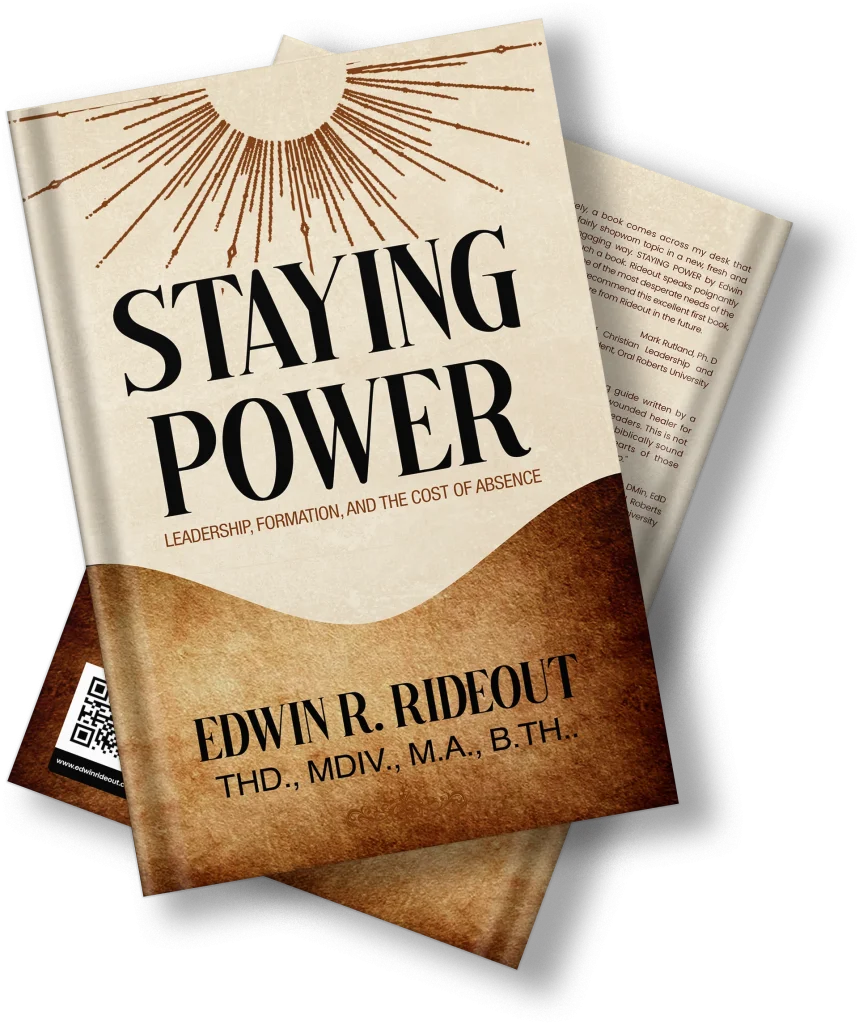
1.Christian Leadership Starts With Someone Staying Close
Rideout keeps returning to presence. Mentors matter because they stay near enough to listen, notice, encourage, and correct.
A pastor can have a full calendar and still lack a trusted person who asks about the soul behind the schedule. The book makes mentoring feel less like a program and more like shared life. Emerging leaders need access to mature people whose lives can be observed up close.
2. Leadership Development Must Go Deeper Than Gifting
Talent can create opportunity before character is ready for the weight that follows. Rideout separates competence from formation, showing why early success is not maturity.
That leadership development happens slowly. Scripture, prayer, accountability, humility, and correction shape instincts before crisis tests them.
“Formation happens in rhythms, not moments.”
That is good news for pastors pressured to produce dramatic growth. A protected Sabbath, an honest conversation, or a renewed prayer rhythm may shape ministry more deeply than another visible achievement.
3. Spiritual Leadership Is Won In The Hidden Life
Public ministry eventually reveals private formation. Paul and Timothy connect doctrine with conscience, desire, character, and conduct.
This makes spiritual leadership intensely personal. Right theology is not enough if anger remains unprocessed or exhaustion is treated as faithfulness.
The book directs attention inward to protect the people a pastor serves. Leaders who notice drift early can address it before private fracture becomes public damage.
4. Pastoral Leadership Needs Relationships Strong Enough For Truth
Ministry can reward self-reliance.
Rideout challenges that assumption through lived experience and research. Leaders describe the value of emotional safety, mentoring, trusted friendships, and presence.
Healthy ministry leadership depends on relationships where truth can travel both ways. Mentors, peers, prayer partners, and accountable friends help a leader stay known instead of merely visible.
5. Correction Can Protect A Calling
One of the book’s strongest tensions is the difference between correction and control. Rideout does not argue for blind submission.
At the same time, he shows how refusing every uncomfortable word can leave a leader under-formed. Personal moments reveal growth after painful feedback.
A mature pastor can ask, “What am I not seeing?” without surrendering judgment. That posture turns feedback into discernment rather than humiliation.
6. Prayer Keeps Disappointment From Becoming Cynicism
Rideout writes candidly about seasons when private prayer became thin. That honesty gives the discussion unusual warmth.
Instead, prayer becomes the place where pressure is processed. Intercession softens frustration. Gratitude interrupts complaint. Sabbath creates room for renewal.
This is ministry leadership without the polished mask. Conflict may remain, but the leader does not have to become colder because of it.
7. Finishing Well Means Becoming Integrated
The book’s final movement reaches beyond endurance. Staying is not enough if a pastor remains outwardly productive while inwardly divided.
Rideout describes integration as belief, character, conduct, relationships, and desire moving in the same direction. That reduces image management because identity is no longer built from applause.
It also makes leadership generational. Paul did not merely give Timothy information; he shared life and prepared him to carry truth forward. Rev. Dr. Edwin R. Rideout invites pastors to consider not only what they are building, but what kind of people their lives are forming.
A Book For Pastors Who Want Depth, Not Another Formula
STAYING POWER – Leadership, Formation, and the Cost of Absence earns attention because it keeps asking useful questions. Who knows you well enough to tell you the truth? What has pressure formed in you? Who are you preparing to lead after you?
For pastors, mentors, ministry teams, and churches, the book offers a thoughtful conversation about formation before crisis. It makes endurance feel less like grit and more like a life shaped over many years by grace, truth, relationship, and practice.
FREQUENTLY ASKED QUESTIONS
Is STAYING POWER useful for experienced pastors?
Yes. Experienced pastors will find thoughtful questions about mentoring, emotional health, accountability, prayer, and legacy. The book invites deeper reflection without dismissing wisdom already gained through many years of ministry.
Can emerging ministry leaders benefit from the book?
Yes. Younger leaders can see why gifting is not enough, how mentoring strengthens character, and why correction, patience, prayer, and healthy relationships can protect a calling over many demanding seasons.
Is this mainly a book about leadership theory?
No. Rev. Dr. Edwin R. Rideout blends Scripture, ministry experience, research, reflection, and practical formation, creating something closer to a mentoring conversation than a corporate manual for ministry leaders today.
Why might a church team read STAYING POWER together?
It can open useful conversations about trust, care, correction, burnout, mentoring, and accountability. Teams may gain language for needs they have sensed but never clearly named together as colleagues before.
Is the book suitable before entering pastoral ministry?
Yes. It presents ministry beyond preaching and visibility, helping readers consider formation, relationships, resilience, prayer, and inner health before they carry heavier responsibility within a local church community over time.
SUMMARY
Discover powerful Leadership Lessons from Staying Power that help pastors develop resilience, strengthen spiritual leadership, and finish their ministry journey with purpose
Conatct Us
Recent Post

- 5009

- 5009

- 5012
- 5009
- 5011

- 5029