From Fearful to Fearless: How Mysterious Joy Transforms Your Life
Everyone has dealt with “Fear” at least once in their lifetime. It can take different forms. Many of these show up as:
Uncertainty about the future
Fear of failure
Fear of trusting something bigger than ourselves.
While fear is a natural emotion, living under its weight can prevent:
Growth
Purpose
Joy
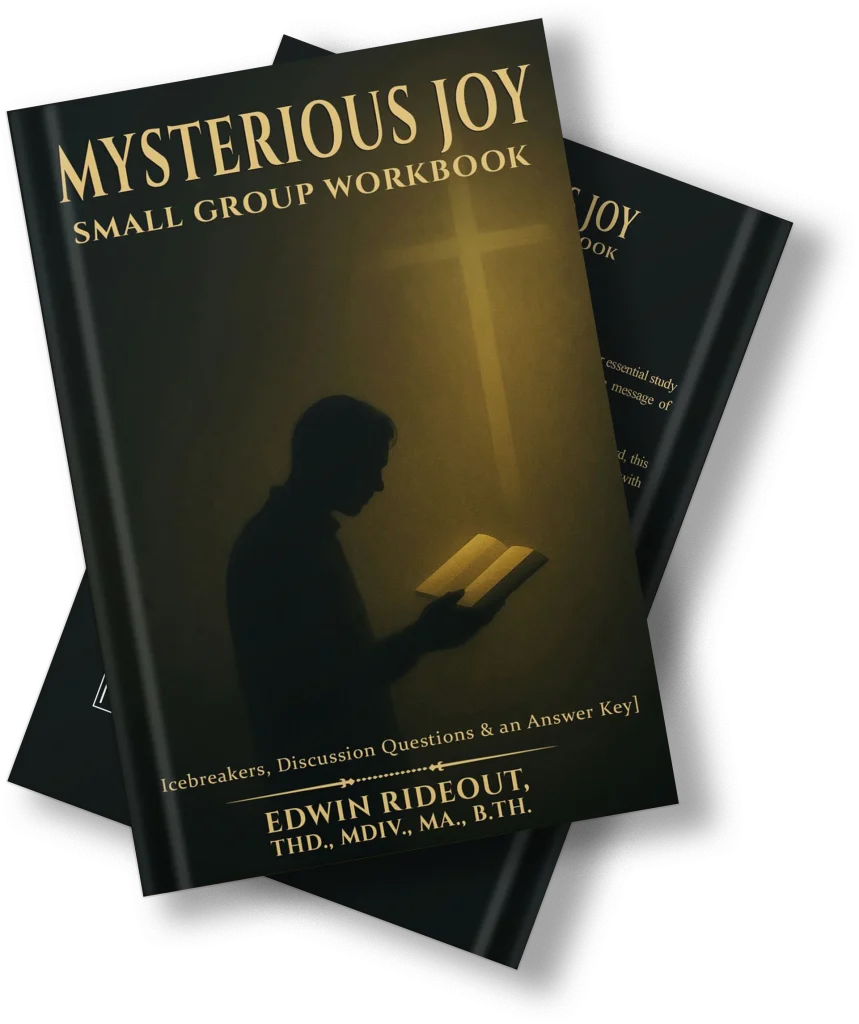
And that is exactly where the journey from fearful to fearless becomes meaningful. Mysterious Joy: Small Group Workbook by Edwin R. Rideout brings readers to discover how joy can exist even in uncertain situations.
The Purpose Behind Mysterious Joy
Edwin R. Rideout wrote this workbook to guide readers toward a meaningful life filled with faith, courage, and generosity.
The workbook states that living according to deeper values leads to lasting fulfillment. It helps individuals understand fear so they can confront it better. Mysterious Joy: Small Group Workbook provides practical steps to help you live with a strong faith and grow with confidence under discomfort.
Choosing Faith When Fear Feels Easier
One of the key ideas explored in the workbook is choosing faith over fear. This concept is about approaching challenges with a different mindset.
Faith does not remove every fear. It gives a person something stronger to hold onto when fear starts speaking too loudly.
In real life, that may look simple. It may mean praying before making a hard decision. It may mean taking one honest step when the full path is not clear. It may mean choosing not to let worry decide everything.
That is the heart of faith over fear. Fear says, “Stay where it feels safe.” Faith says, “God can still lead you here.”
The workbook explains this in a practical way. Courage is not pretending fear is gone. It is moving forward while fear is still there, because trust has become stronger than doubt.
The Role of Christian Courage in Transformation
Courage is often misunderstood as boldness without hesitation. However, true Christian courage is rooted in trust and obedience. It is about taking action even when it feels uncomfortable.
Christian courage shows up when someone says, “I am nervous, but I still believe God is leading me.”
In the workbook, courage is shown through ordinary choices. A person may choose to give when holding back feels safer.
They may forgive when pride says not to.
They may obey God even when the next step feels uncomfortable.
That kind of courage comes from prayer, reflection, and small moments of trust… Little by little, fear loses control, and faith becomes stronger…
The Inner Change That Shapes Your Outer Life
Some books only make readers think for a moment. Author Edwin R. Rideout asks readers to look at what they believe, how they respond under pressure, and what fear has quietly shaped in their lives.
That is where spiritual transformation begins…
Not in big speeches or sudden emotions, but in honest moments.
A person notices where they have been holding back.
They see where trust has been weak.
They begin to understand why certain choices have felt so difficult.
The workbook gives readers space to slow down and reflect. Its questions are not there to fill pages. They help people connect faith with real life. Over time, that kind of reflection can change how a person thinks, prays, gives, forgives, and moves forward.
This is the strength of spiritual transformation. It does not just change what someone knows. It changes how they live.
What Changes You Can Expect as You Read
Reading this workbook does not feel like flipping through advice. It feels more like being asked the right questions at the right time.
A reader may first notice small changes…
They pause before reacting.
They pray before deciding.
They stop treating fear like the final answer.
The book helps readers see where fear has been leading them and where faith can lead instead. That is where real change from being fearful to fearless begins. It grows quietly, taking the next step.
Final Thoughts: The Quiet Work of Becoming Brave
Fear may still knock. It may still ask questions. It may still try to make the safest road look like the only road. But after walking through this workbook, the reader begins to see fear differently.
It is no longer the boss of every decision. It is no longer the voice that gets to close every door. That is the beauty of this book.
It does not shout in fear. It gently teaches the reader how to outgrow it. Through faith, reflection, and honest obedience, Christian courage becomes a way of living with confidence.
FREQUENTLY ASKED QUESTIONS
Why do I still feel afraid even though I believe in God?
Fear is natural and common, but faith helps you overcome it in different ways. Faith supports you and eliminates fear completely.
How to Overcome Fear and Start Living Fearlessly?
Unfold the path of your journey by taking slow and steady steps, by building your trust in God.
Is it better to be fearful or Fearless?
Living without fear helps you grow. While sometimes your potential and opportunities are limited by fear.
What are the 4 types of fear?
The most common types of fear include: Failure, rejection, uncertainty, and loss of control.
How does “Mysterious Joy” help transform fear into confidence?
This book combines reflection, faith, and practical steps. It guides personal growth and builds lasting confidence so you can not only transform but rebuild what’s lost.
Conatct Us
Recent Post

- 5010

- 5025

- 5038

- 5053

- 5039

- 5043