Why Is Mysterious Joy: Small Group Workbook a Powerful Small Group Bible Study Workbook for Christians?
A good Bible study can fill a notebook with answers. A meaningful one can follow you home.
Christians need more than information. We need space to wrestle with Scripture, hear another believer’s view, admit where obedience feels difficult, and decide what faithfulness looks like in life.
Mysterious Joy: Small Group Workbook by Edwin R. Rideout is built around that movement from reading to response. The workbook combines Scripture, conversation, reflection, group activities, and practical action. Its ten chapters move through fear, obedience, hardship, generosity, significance, relationships, and “holy actions.”
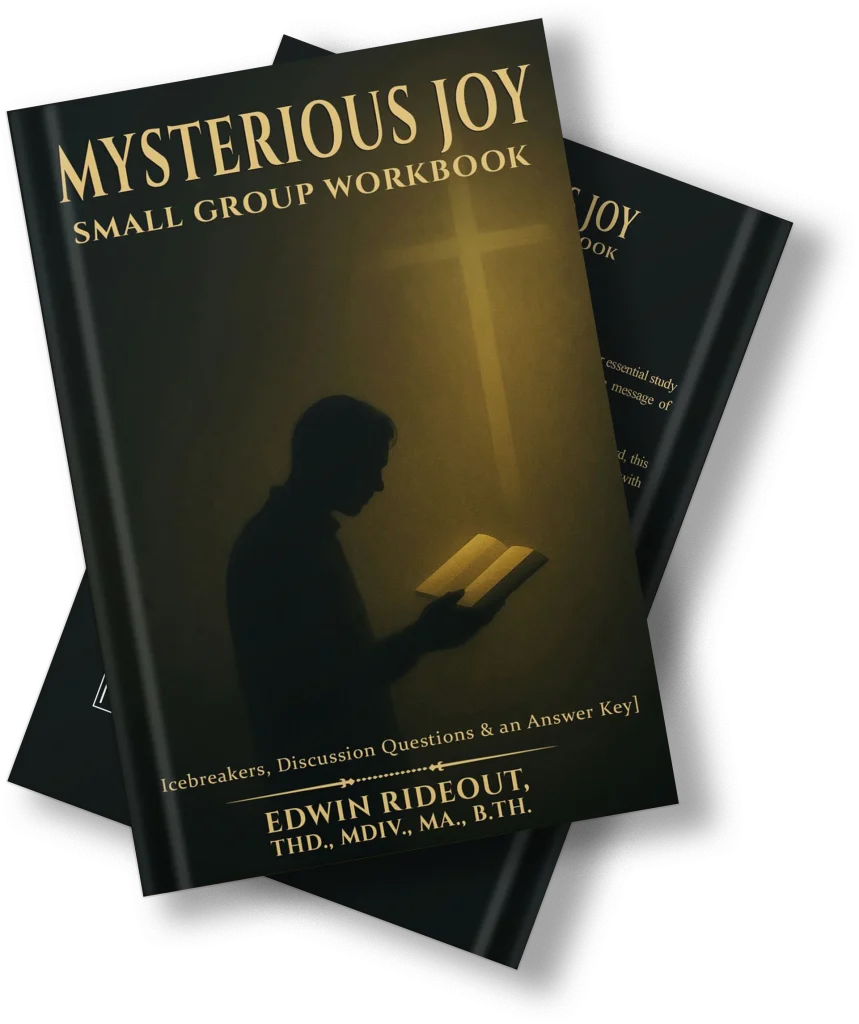
A Small Group Bible Study That Makes Participation Easier
One common small-group problem is uneven participation. A confident person answers quickly, quieter members wait, and discussion becomes a miniature lecture.
This workbook creates several ways into the conversation. Icebreakers invite personal stories. “Go Deeper” sections return attention to Scripture. Written spaces let people think before speaking. Practical actions then carry the lesson beyond the meeting. The book recommends prayer, Scripture-based discussion, worship, fellowship, service, and a relaxed atmosphere where people feel valued.
People process faith differently. Some speak to discover what they think. Others need silence first. A strong Bible study workbook gives both room.
A Bible Study Workbook That Moves Beyond Passive Reading
There is also a learning reason to ask questions instead of merely rereading. A 2026 review covering 23,850 publications concluded that active retrieval produces better learning outcomes than passive study.
That principle fits the workbook’s design. Participants identify biblical examples, explain passages, recall experiences, write responses, and discuss what they would do next. The Christian Bible study does not treat people like an audience. It asks them to retrieve, interpret, connect, and apply.
For a leader, that changes the meeting. Instead of asking, “Did everyone understand?” ask, “What truth are we prepared to live?”
A Bible Study Guide Grounded in Everyday Decisions
The themes stay close to real life. “Fearful to Fearless” explores trust and generosity. “Uncomfortably Obedient” examines moments when God’s direction conflicts with comfort. Later chapters address generosity, tithing, authentic relationships, significance, and practical mercy.
That progression gives the Bible study guide range. A participant may arrive thinking generosity means money and leave considering time, words, forgiveness, hospitality, service, or attention.
The practical actions make this useful. One chapter asks participants to keep a prayer and praise journal. Another encourages concrete acts of kindness. The final chapter asks readers to notice where greater thankfulness, mercy, or generosity may be needed.
Why Community Strengthens This Christian Bible Study
Private study has value, but some questions become richer when another person is sitting across from us.
The workbook makes room for testimonies, shared experiences, prayer support, and honest discussion. Its facilitator section provides sample answers as starting points rather than final verdicts, helping leaders guide conversation without closing it down.
That approach feels timely. American Bible Society’s 2026 reporting says Bible use and Scripture engagement moved back toward 2024 levels after gains in 2025. A structured small group Bible study cannot create spiritual growth automatically, but it can make consistent engagement easier to practice together.
What Sets It Apart From Other Small Group Bible Study Books?
It is the rhythm: connect, open Scripture, think deeply, speak honestly, and act.
Among small group Bible study books, that rhythm gives leaders a framework while leaving room for conversation. It also reduces the pressure to invent an activity, discussion question, application, and closing challenge weekly.
Participants are not only asked what a passage means. They are invited to ask what it changes.
Final Thoughts
A worthwhile Bible study should leave more than highlighted pages behind. It should help people notice where faith touches fear, money, relationships, choices, habits, and service.
Mysterious Joy: Small Group Workbook succeeds when a group uses it that way: not as material to finish, but as a shared space for Scripture, reflection, honesty, and action. author Edwin R. Rideout gives readers structure, yet deeper work happens in the room, between people, before God.
FREQUENTLY ASKED QUESTIONS
Is Mysterious Joy suitable for a new small group Bible study?
Yes. Its icebreakers, Scripture questions, practical actions, and facilitator support give new groups a clear starting structure while still allowing experienced Christians to explore deeper personal application and meaningful discussion.
Do I need Mysterious Joy: Life in the Kingdom of God first?
The workbook works as a guided companion to the main book, so reading both can add context and depth. Groups wanting the fullest experience will benefit from using them together.
Why choose this Bible study workbook for a church group?
Choose it if your group wants more than weekly reading. It combines biblical reflection, conversation, personal writing, and practical action, helping participants connect Kingdom principles with ordinary decisions throughout the week.
SUMMARY
Discover how Mysterious Joy: Small Group Workbook helps Christians create deeper, more meaningful small group Bible study discussions.
Conatct Us
Recent Post

- 5010

- 5025

- 5038

- 5056

- 5048

- 5046